Running a Raid: 10 Golden Rules (part 2)

RaidRules2

Last week we took a look at the first five of That Which Should Be Lore to raid leaders from all corners of the World… of Warcraft. Well, all right – it’s only advice from an oversized bird, but here’s to it being helpful or at least entertaining. Here are the other five rules for your perusal.

6: Talk to your raid when things go wrong. Things go wrong. Fact. If they do, take a deep breath; some of your raiders might not. Try to be patient – remember that players often don’t really get a fight until they’ve seen it in action, and anyone can make simple mistakes. Keep an eye on what’s happening in a fight to stay informed. Research addons you can use to monitor performance and stay quietly informed; not to throw blame around, which some raiders might do. Prevent that: it will obscure the real cause behind things going wrong and your raid group may acquire a mentality that splits it into “us/them”.

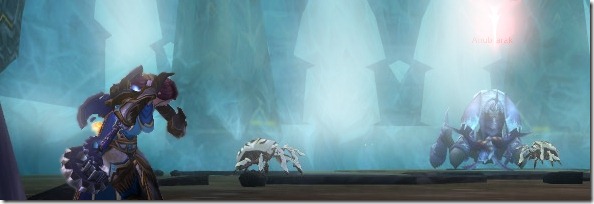
  • As soon as a wipe occurs I start talking to the raid about it. For example, we wiped a lot on Yogg Saron the first time we met him… her… it.. Whenever a wipe occurred I began with something that went well and was applicable to as many of the raiders as possible. For example, the brain room team working like a well oiled machine when inside and the outside team freeing people from constrictors.
  • I’d then state what seemed to be the problem for the attempt of cause of the wipe. Say for this attempt it was the brain room team needing to be a bit sharper getting out of the brain room so that they didn’t turn into frothing lunatics and try to kill the rest of the raid.
  • I’d go on to things we could improve without laying the blame at any one raider’s feet.
  • Last but not least, I’d ask if anyone has anything to add. If your raid has the right atmosphere people may well follow your lead and approach, and be supportive at best and constructively critical to each other at worst. This helps the raid build a joint safe environment.

7:  Deal with conflict. Conflict can occur between any raiders if the situation is right for it. It may be a single flare like two players conflicting over DPS. It may also be something more drawn-out – perhaps something that starts with one player sniping at another after a wipe, and then the argument gets dragged up and worsened as the run continues. There are a lot of reasons conflicts happen – the crux of it is to remember that people are just people, and will react to the situation and each other differently.

  • To some extent conflicts always involve you as the raid leader, even if you’re not directly involved. If you think a conflict is brewing up then deal with it in whispers to the players concerned before it hits the raid. If a conflict hits the raid and remains unresolved it will quickly get morale down and can lead to players making mistakes – it may lead to the group collapsing.
  • A lot of people don’t like dealing with conflict and that can include us raid leaders. Still, it’s important to sort it out before half the raid vote with their feet. Find a method of conflict resolution you’re comfortable with and one that supports the raid group. As an example, Herding Cats’ approach is to start dealing with conflict before it occurs. If you remember from last week I said that we tell people we expect them to be friendly and that griefing isn’t acceptable. Any troublemakers during the run are then dealt with either by a polite but firm comment in raid chat or a whispered warning from the raid leader or main assistant. Persistent or particularly offensive players are met with a firm hoof out of the instance portal.
  • I’ve found in the past that entire raid groups benefit from conflict resolution. People not involved in the conflict don’t feel that they may be caught in an awkward situation. People on the receiving end of grief feel supported. Sometimes the player causing trouble settles down and is grateful – a lot of the time they’re not troublemaking out of spite, they’re just not thinking.

8: Wear the sash well. Make sure you’re in control if you’re the raid leader. It’s fine if people have ideas they want to contribute to an encounter – being open to that is a sign that you are treating everyone equally, including yourself. But you may get raiders who ‘backseat raid lead’ for whatever reason. Perhaps they’re usually a raid leader and don’t realise they’re stepping on your toes. Perhaps it’s your first time in this encounter and though you’ve done your research, they’ve done it six times on seven alts and know better than you. Perhaps you’re a lowly DPS pretender to the raid leader crown and they’re a tank who believes that tanks rule over all by right.

TankTics

  • Having backseat raid leaders will confuse the group because everyone will listen to someone different. The consequence of a backseat raid leader yelling directions in TotC10? Two thirds of the group charging in on the arena fight on his orders to mete out justice to the Death Knight while leaving the enemy healers to heal to their hearts’ content before you’ve had time to readycheck.
  • There is a fine line between contributing and backseat raid leading. When I’ve come across this my usual method of dealing with it has been to note in chat that it’s important to have one raid leader so that people don’t get confused and a quick whisper to the backseat raid leader asking him to support you.
  • Also, if you’re delegating to one or several people – say you actually want Bob to help lead – then make it clear that the group should listen to decisions and whispers from you or Bob.

9: Encouragement. Oftentimes people will talk about something going wrong rather than something going right. This happens a lot in WoW too – particularly in any type of raid. Not to mention the fact that some players approach PUGs negatively; a tank might be convinced that an Ony25 run is  a loss before your merry band of adventurers gets to Dustwallow but will sigh and come along anyway. That same tank’s mindset might cause him to slip up on positioning Onyxia and see the unwary and dispirited melee DPSers take a trip into whelpland.

  • So, try to present the positives – but be genuine and don’t overdo it. Let the group know when you’re impressed with something. If something went well, rejoice. The key though is not to forget individual players. If you have time occasionally whispering players when they’ve done something well  – even if they’re doing other things wrong – is a nice way to let them know they’re appreciated. This is important: especially if they’re new to the encounter or your group – or both. It will build trust, teamwork and their own sense of achievement.
  • Crumbs, if they *are* doing something vitally wrong then you can address it with a brief chat. For example, think of an encounter with Lord Jaraxxus; “Just to let you know that you’re doing really well on the dispelling, nicely done. Now if you could also focus on running away when you have legion flames – that will take some of the strain off the healers.”

10: Breaks. Raid groups can be fraught with multiple players going AFK “for 2 min”. Before you know it there’s been an extended break for 20 minutes. Players will be bored and will have lost focus – some folks may leave, which leads to extra time spent finding replacements.

  • You can cut impromptu AFKs down by building in or planning breaks and letting people know they will happen. They can then plan to get a drink, make that vital phone call, fix their addons – whatever – during the planned break time. Whether or not you can announce breaks by the clock or whether it’s better to plan in half hourly blocks subject to how the run is going depends both on your group and the instance.
  • It’s also a good idea to consider breaks tactically. For example, if you’re repeatedly bouncing off of a boss then announcing a five minute break after the next attempt will let people know that soon they can clear their mind. I’ve found that it’s possible for people to come back refreshed and down the boss flawlessly after the break. Equally, a break after a successful fight may sometimes be a good idea to let players relish the victory, but more often than not it’s a very bad idea to waste the free morale boost from a boss kill.

Now all 10 ‘rules’ in the book of Mimetir are up, though there are probably a dozen more basics to talk about. As I and last week’s commentators keep saying, it’s all about individual style. A constant willingness to learn and adapt your style also helps. I think the most basic principle, the one that rules them all, is not to be a brick wall to your group.

What are your thoughts? Do you wholeheartedly agree or vehemently disagree with any of the 10? Do you have any golden rules you’d like to share on raid leading? How do you feel as a raider, not necessarily a raid leader, when reading this? Are you thinking about starting to raid lead?

Crystal Spire of Karabor 2.0

item_50028

Have you seen this mace? It’s supposed to drop from Rotface, I believe. Have you looked at the proc yet? Make sure you read it twice.

Each time your spells heal a target you have a chance to cause the target of your heal to heal themselves and friends within 10 yards for 217 each second for 6 seconds.

I’m assuming there’s a 45 second internal cooldown. This mace could come in handy for any class, I’d imagine. Judgment of Light? Chain Heal? Circle of Healing? Wild Growth? You’ll be hardpressed to make the argument for why this mace is hands down better for one class over another.

I know there’s one person in my guild who won’t be getting it.

I’ve already got my legendary. I’m assuming Val’anyr won’t get buffed to bring it in line with 3.3 weapons. Loot Council’s going to have a difficult time with this one (or easy, since it’ll be effective in the hands of any of our healers anyway).

I’m Taking My Guild With Me!

Scott Johnson and Randy Jordan of The Instance podcast struck some geek gold when they had a chance to digitally sit down with Tom Chilton of Blizzard Entertainment!  You can find the interview in their latest episode, downloadable at their website.

Although most of the conversation revolved around the new Blizzard Pet Store, and it eventually evolved into Blizzard’s pay services.  Right now, we have Name Change, Faction Change, Race Change, and Server Transfer.  Chilton then began to put his two cents in about a possible future service.  This is where my ears perked up:

“…as far as other services that we’d like to see in the future, there’s not a whole lot that we’ve really talked about at this point.  The one that I think that’s kind of obvious, that stands out, is that it’s a real pain right now to move your guild from one server to another. So, I think we’d like in the future to develop a way to do, like, a guild transfer from one server to another.  So that you can move your guild bank and all that kind of stuff at the same time.  And I think that’s going to become more important in Cataclysm, because, in Cataclysm, we’re introducing the concept of guild leveling, and all that kind of stuff.  And, that would present an even bigger barrier to moving your guild from one server to another, if suddenly you lost all your levels and all that, because you had to disband and re-form your guild.  So, to me, that one kind of makes sense, although it’s not something that we, you know,…actively have people working on right now.  This is something that I think is a likely candidate for the future.”

Now, I’m a HUGE fan of the guild leveling process.  As I’ve stated before, I’m a huge fan of a family-style guild and the aspect of raiding as a team sport.  I think it’ll be a huge benefit to the cohesiveness of guilds in the game.  It definitely discourages “guild hoppers”, since the speculation is that you’ll be able to have guild-only crafting patterns that you can only wear if you’re in the guild that crafts it.  If you leave that guild while wearing a full set of guild-only regalia, it goes into the guild bank for another guild member to wear.

The idea of a Guild Transfer service takes the stress off any established guild to stay on its server.  You, as a guild, can put all your effort into tweaking your guild.  If you decide it’s time to move to greener pastures, you’re not penalized for it.

A couple questions come to mind:

  • Does cost depend on guild size?
  • What about a guild with a lot of alts?
  • Will the charge be per account, per character, or just one lump sum?
  • Can there be “half-transfers”?  Say only half want to move, is one side penalized?

Now, if only I could get  Unpossible and Team Sport on the same server.  Then again, Zul’jin is a PvE server and Nazjatar is a PvP server, and both guilds like where they are.  =( 

How do you feel about the speculation of a Guild Transfer Service?  Is it something you would look into doing?

ThespiusSig

Email: Elder.Thespius@gmail.com | Twitter: @Thespius

Oculus Gets a Facelift

OCULUS

Image credited to Blizzard Entertainment

Since the days of Burning Crusade, we’ve seen the rise of the Heroic.  Five brave heroes banding together to take on our favorite dungeons, but the foes are much more formidable.  The badges/emblems, the epic loot, the reputation, the Nether/Orb, and the Heroic Daily.  These have become staples of our WoW community.

My personal favorite?  In BC, I loved Shadow Labs.  People whined about it taking too long, but I loved it.  In WotLK, it’s hard to choose a favorite.  Nexus, Utgarde Pinnacle, and Halls of Lightning certainly rank among my favorites.

However, as a WoW player from any walk of life, you’ve probably been a part of this conversation:

“Hey, does anyone wanna do the daily?”

“Sure, I’ll go!  I still need emblems for my heirloom piece.”

“Yeah, me too!”

“Has anyone checked what the daily is?”

“Lemme check.”

(Pause for dramatic effect)

“Oculus.”

“….F*** that.”

“Yeah, forget it.”

Oculus is the second dungeon in Coldarra, the subregion in northwest Borean Tundra.  There it sits, laughing at all of us.  It touts itself as the most hated heroic we’ve ever set foot in.  Even Heroic Shattered Halls was manageable once you got geared enough.

Trouble usually comes from coordination and orientation.  Being the first 5-man to introduce flying mounts, I’m grateful that I can’t lose my driver’s license by the horrible flying I do in Oculus.  And trying to get a PUG, or even a late-night group of post-raid guildies, into a focused mindset to handle the rotation needed to down Eregos is a chore unto itself.

Combined with a slew of other issues we’ve all come to hate, Oculus has become the least-run Heroic in the game.  People loathe it.  Forums and blogs feed the hatred.  I have yet to complete Proof of Demise, simply because I can’t stomach the thought of doing Oculus.  Even in my guild last night, I heard someone say, “I’ll run any Heroic but Oculus.”

A Brand New Day

Thankfully, Patch 3.3 is going to bring us some treats to ease our anger.  It was just announced in the patch notes that Oculus is getting nerfed.  **Pause for roaring applause**

  • Many bosses and creatures have had their total health reduced.
  • Several bosses and creatures have had cooldowns on specific abilities increased, effect durations reduced, and damage on some of these abilities reduced.
  • Ring-Lord Conjurers and Sorceresses now hang out in packs of 4 instead of packs of 5.
  • Vehicle scaling on the drakes based on the rider’s item level has been increased to make them more powerful.

Perhaps Blizzard has finally noticed the dust collecting below the portal of this monstrosity.

Oculus was by no means impossible, but it definitely was a bit too challenging for its level.  Especially now with the Emblem grind going full force, this shift puts Oculus into the mix of “Chain Heroics”.

I’m looking forward to trying out the new Oculus to see if I can heal through it without wanting to pull my hair out.  I also look forward to trying my hand at some fancy achievements that I never got to try before, such as Amber Void, Ruby Void, and Emerald Void!  Another step toward my goal: Glory of the Hero.

Do you agree with the negative stigma surrounding Oculus?  Are you looking forward to its facelift in Patch 3.3??

ThespiusSig

Email me: elder.thespius@gmail.com  |  Tweet me: @Thespius

Running a Raid: 10 Golden Rules (part 1)

Raid-Rules-1

So you want to be a raid leader? Well, you gotta ask yourself one question. Do I feel…

Ready?

I don’t know everything about raid leading by a long shot but I thought I’d share some of my musings on the hows and whys of this arcane practice.

Many players are shouting out on trade but it’s not to bawl their profession at passing trade watchers or haggle over the price of Poached Sunscale Salmon. Much of the cacophony in the traders’ market seems to be about recruiting to groups; quite often to PUGs, so much so that the LFG channel is making a permanent return. That means there are a lot of groups, and many players wearing the raid leader sash these days. So, this post is for everyone – people who raid lead and people who are led in raids.

1) Introduce the raid at the beginning. I call it ‘housekeeping’. You should work out your own style. This approach is fair on the players in the group and particularly important in PUGs – it puts everyone on level ground. They know what is expected of them. You’re also introducing yourself and presenting as a bit more than a shadowy stranger wearing the master looter crown.

Personally there are a few things I like to talk about here. In Herding Cats we have a strict zero tolerance policy against griefing and bad manners – or as my guild leader puts it, ‘That Guy’. I make it clear to the group members that we expect them to be polite and friendly. This gives everyone a fair warning in advance and introduces the raid as a safe place. I then also assure the group that they don’t need 10k DPS, we don’t expect everyone to know all the tactics and that we’ll explain them, but remind them that fun is the main aim of the game. Then we get onto less exciting things such as hush in the librar- sorry, raid spam, and loot rules.

Several times I’ve had players whisper me during the housekeeping saying that they feel they’ve joined a mature raid and they appreciate knowing there are boundaries and safety nets applicable to the whole group.

2) Interaction. Remember that your group will get much further if they trust and respect you – and you them. Talk in full sentences. Keep your tone polite at all times. Join in on banter and jokes. Keep the chatter going – ask people what their favourite chocolate bar is, if you like. Answer questions, particularly as the raid is forming – that’s one of the most likely times for a raid to fold. Above all: pay attention to your group. They will feel like you know what you’re doing and just maybe you’ll feel that too.

People judge on first impressions in real life – they do in instances, too. Make a good first impression and then keep it up throughout. I’ve joined several PUGs recently being led by strangers who have ignored my questions about tanking or healing assignments. Just the other day a random raid leader decided that our PUG didn’t need two shadow priests for Naxx25. These things do not inspire confidence in me as a raider; put yourself in your raiders’ shoes and think about what would make them feel comfortable.

3) Be approachable. Let the group know that they can whisper you or another group member you trust with questions, comments or suggestions. Also let the group know that they can offer suggestions for tactics in raid chat at an allotted time, such as after tactic spam – and that you will listen to the suggestions and decide on the final tactics. This can be a useful group to keep a group interested if it’s a new encounter for the group or even you, or something is proving very difficult for whatever reason.

In Herding Cats we usually make it clear at the beginning that players can whisper myself or Ekatrina if they need something cleared up. If a player has a specific role in a fight – such as dealing with brittle adds during the Ignis encounter – we whisper them to check they’re ok with the role. We also try to get a general idea, group size permitting, how experienced each raider is so that we can keep an eye out for anyone who might need support or to be whispered to check they’re clear before starting the encounter. Some might say this is extra work or babysitting but there’s nothing wrong with it – it can make a new or less confident player feel supported and can avert a wipe for the whole group. Indeed, we’ve acquired several extremely loyal and friendly raiders because we took the time to care for them when they first raided with us.

4) Tactics: don’t assume. Don’t assume for a moment that everyone knows the tactics if you’re in a group with one or more PUGger or new guild member. This is relevant for any encounter. Remember that new players are getting to 80 every day. Some veteran players are coming anew to raiding from other styles of play or have their own idea of tactics. Some players will have suggestions – some of them will be good. Make time for those and take them into account for the final decision on How It Will Go. Explain your tactics for the encounter, even if it’s just the bare essentials of what a player needs to know to not kill the raid.

Also don’t assume players know YOUR tactics. There are several fights which can be done slightly differently. Plenty of times we’ve led a brave PUG to Thaddius and said +++++Thaddius—— only to have two or three people adamantly insist it’s the other way around. A lot of the time it doesn’t matter which way round you do the tactics; what does matter is that you make sure that there is one, clear set of tactics.

5) Know your stuff. Have a solid idea of the encounter’s tactics. You might know the tactics from a melee DPS point of view but you need to be able to advise *everyone* in the raid, whatever role they play. Read up on encounters on sites like WoWwiki or watch videos on TankSpot and Youtube. The trick then is to explain the tactics in a clear, concise way that players will listen to.

If you have time and think you will raid lead regularly then I recommend writing documents in advance with your own tactics spam for more complicated fights so that you can copy/paste or read it out during the raid. This is what i did when leading a group into Ulduar, many of us for the first time. There’s a lot going on and a lot of things that players need to keep in the back of their mind, so I split the spam up with an ‘everyone’ section first and then descriptions by group role. This lets ranged DPS, for example, know what will affect them directly and reduces the loss of focus during tactic spam; it also provides for those players who are curious about tactics for other roles. Writing it in advance also allows you to pare down irrelevant information rather than getting carried away during the raid.

In my opinion those are the first five of the widely applicable basics. They are very much my own opinion. i appreciate that everyone has their own style of raid leading and approaches it differently. Not only that, different situations need to be handled differently. Look out for the other five golden rules in the Book of Mimetir coming soon.

What do you think – do you find any of these helpful and plan to adopt them in your next run? How essential do you think careful raid leading is in a PUG and/or a guild group? Do you think I’m too much of a careowl and people should just “STFU u nub”? What’s *your* favourite bar of chocolate?