The Hidden Raid Problem No One Talks About: Instant Defensiveness

Here I am in the middle of a week, watching Max undergo another reclear before the Diablo 4 expansion was slated to launch. He gets to a part where he’s watching another guild go through their kill of Midnight Falls. But take a listen and watch what happens.

This raid just cleared the entire tier and secured their CE.

Instead of celebrating, players immediately started defending themselves about misplays or other errors.

“Yeah I died there because…”
“That wasn’t my fault…”
“I got screwed by…”

No one really paused to acknowledge the kill. That positive moment just seemed to dissipate and fade out.

The raid went straight into deflection. If you’re seeing this in your raid, it’s not just a one-off behavior. It’s now a team-wide cultural issue.

The Instinct to Defend

This type of behaviour doesn’t come out of nowhere. Players don’t wake up one day and decide to deflect responsibility after a kill. It usually builds up over time for a variety of reasons:

  • Fear of being called out: No one likes to be criticized in front of everyone else.
  • Fear of losing a raid spot: No one wants to get permanently benched.
  • Past experiences with harsh criticism: We’re talking harsh, toxic environments, making the game generally unfun.
  • A culture where mistakes are punished instead of being learned from: This can range from being made fun of or teased mercilessly.

So what happens?

Players get conditioned to protect themselves first by justifying what happened or blaming things beyond their control. It happens even in moments where it doesn’t matter anymore (like killing the final boss).

Why This Is a Bigger Problem Than It Looks

At first glance, it might seem harmless. Who cares if someone explains why they died after a kill? We need to take a step back though and re-examine this.

If your team feel the need to immediately justify themselves, it means:

  • They don’t feel safe making mistakes
  • They assume blame is coming
  • They prioritize self-preservation over team success
  • They’re mentally stuck in “defense mode” instead of “growth mode”

That has consequences. Teams that operate like this will end with one (or all) of the following:

  • They learn slower
  • They communicate worse
  • They take feedback personally
  • They spend more time assigning blame than solving problems

You can’t build a high-performing raid like that, and you end up with a raid team that’s stuck in early or mid mythic without the tools needed to progress past that.

The Missed Opportunity After a Kill

Post-kill moments are important.

They’re when you:

  • Reinforce good habits. Highlight positive game play from people and recognize them when they’re correctly done.
  • Identify real learning points. Show where people “got it” and spread it to the rest of the team.
  • Celebrate progress. The team got a new best (even if it’s a new phase or a lower percentage).
  • Reset the team mentally. From despair to excitement.

If your raid immediately turns into a courtroom, you lose all of that.

Instead of:

“Nice job, clean that up the adds next pull, and we can see more.”

You get:

“Let me explain why that wasn’t my fault.”

Now you’ve wasted everyone’s time.

Freedom to Fail Is a Competitive Advantage

One of the things Max mentioned is that they had to actively correct this behaviour early in their guild’s history.

They made it clear:

  • It’s okay to die
  • It’s okay to mess up
  • Not every mistake needs a full breakdown
  • If it’s not new or useful, move on

That’s the key. Say it with me!

Not every mistake deserves airtime.

If the team already understands the mechanic and what went wrong, rehashing it doesn’t help. It just slows you down and creates tension. High-end teams don’t obsess over every individual mistake. They focus on patterns and meaningful improvements. I don’t know how long your team raids for, but both of mine only go for six hours a week.

What Your Team Should Actually Be Doing Instead

After a kill, your raid should look more like this:

  • Quick acknowledgment of the kill
  • Identify one or two real issues if needed (or flag it for next week)
  • Move on

That’s it.

Not every death needs a speech, and not every mistake needs a defence.

If it’s something new, sure, call it out and learn from it. Absolutely make it a learning lesson for everyone, especially if someone died in a completely new way or missed a mechanic that’s crucial the first time. Go over it once, and talk about it as a team so they know what to expect and how to handle it if it ultimately does happen again. Certain things are worth drilling and repeating until the team gets it, but that doesn’t apply to all mistakes.

If it is already understood, it is wasting precious raid time.

How to Fix It in Your Own Raid

If you’re seeing this behaviour, it needs to be addressed directly.

1. Set the Expectation

Tell your team clearly:

  • You don’t need to defend every mistake
  • Not every death needs an explanation
  • Focus on team improvement, not individual justification

2. Change What You Reinforce

If you constantly call out individuals harshly, players will naturally start defending themselves.

Instead:

  • Focus on solutions
  • Keep feedback concise
  • Avoid turning every mistake into a lecture

Actually, call out the positives. Talk about what you liked. Name players individually who did something good (even if it’s during the pull), and recognize their effort or moves.

3. Protect the Post-Kill Moment

Don’t let it spiral.

If someone starts going into a long defense after a kill, cut ’em off.

“Doesn’t matter. Boss is dead. We’ll clean it up next time.”

We use Warcraft Recorder to capture our game play. It’s not something that needs to be immediately reviewed and it can be looked at after the raid is over. Celebrate the wins, since that’s the tone you want.

4. Normalize Mistakes

Make it clear that mistakes are expected and understood especially in progression. If players feel like every error is being judged, they’ll always be on edge. The team needs to relax and play loosely when starting out.

And that leads right back to defensive behavior.

If your team kills a boss and the first reaction is panic and justification instead of celebration, something is off. That doesn’t mean your players are bad. It means that the raid culture needs adjustment. The best teams aren’t the ones that never make mistakes. They’re the ones that don’t waste time pretending they didn’t.

I’m fortunate enough that this hasn’t happened in my raids yet. But if my team starts pre-emptively defending themselves before I ask questions, I’ve got my lecture in the back pocket ready to come out. If I were to put money on it, I expect it’d be one of my healers trying to present themselves in a positive light but addressing their own shortcomings right away. My first response is going to be, “I didn’t ask! Simmer down! You goofed, that’s okay, this isn’t a deposition!”

A Tale of Tanking Turmoil

There’s something different about losing a tank, especially during progression.

DPS come and go. Healers rotate in and out. But when a tank leaves, it shakes the foundation of a raid team. And recently, both of my teams lost that critical foundation.

The Silent Goodbye in Death Jesters

Let’s start with Death Jesters. One of our longtime tanks, someone who anchored our lineup from Season 1 of this expansion all the way through to now, decided to step down.

It wasn’t entirely unexpected. He had hinted a few weeks prior that the skill gap in the team was starting to outpace him. We had already started looking for possible replacements, just in case. Then we finally killed Mythic Soul Hunters, pushing us to 6/8 Mythic, and shortly after that… he was gone.

He posted a long goodbye message in Discord and left. While there was an initial conversation about a potential role swap, it seemed like that was rescinded. No sticking around to contribute in a different way. Just… out.

I get it. Tanking at this level is pressure. Every mistake is magnified. Every movement matters. But it still sucked to see him peace out like that, especially after how far we’d come together.

The Overnight Exit in Last Call

Meanwhile, over in Last Call, things were just as messy, but for different reasons.

One of our tanks was frustrated. Frustrated with our DPS, frustrated with the wipe rate, frustrated with what he saw as underperformance across the board. That frustration boiled over in our post-raid discussion.

I wasn’t there for it. But from what I heard, another raid leader got into it with him and dropped something to the effect of, “If you don’t like it, you’re free to leave.”

That is not how I would’ve handled it. Not at all. I was in the middle of making something to eat because I don’t eat during raid.

I would’ve tried to de-escalate. Maybe said something like, “If you’re this upset, let’s take a week and transition you out properly. I’ll help you find a team that’s a better fit.” Instead, by the next morning, he was gone. No message. Just silence.

He had sent me logs from Loom’ithar trying to justify his performance, like being 5th overall on DPS, despite being a tank. But it didn’t mean much when our raid wasn’t alive entering that phase. Ranking doesn’t matter when over half your team is dead.

And yeah, I didn’t Vantus the boss that week. Maybe that would’ve helped us kill it earlier. Maybe not. But we did kill it the next week. And now we’re working on Fractillus.

In any case, losing him left a big hole, and the timing was awful.

Why Tank Losses Cut Deeper

Tanks aren’t just bodies. They’re the backbone.

There are only two of them in a raid. They work closely together, and that chemistry takes time to build. Good tanks anticipate each other’s movements. They coordinate cooldowns. They position for the raid. They set the tone of how the pull is going to go.

When you lose a tank, you’re not just filling a role. You’re rebuilding synergy.

And it’s not like replacing a DPS where you can post a recruiting message and get 10 responses. Quality tanks at the Cutting Edge level are rare. And they know it.

What To Do When a Tank Leaves

It sucks. But it’s not the end of the world. Here’s how I’m handling it now, and what I’d recommend:

  • Always be scouting. Even when your roster is full, keep feelers out. You never know when you’ll need someone.
  • Have early conversations. If someone seems off or expresses doubts, talk to them. Don’t let it fester.
  • De-escalate instead of confront. Tensions happen. But leadership means diffusing, not igniting.
  • Offer transitions, not ultimatums. “Let’s find a better fit” works better than “Then leave.”
  • Cross-train players. Having a flex DPS who can tank in emergencies is worth its weight in gold.

Looking Ahead

In Death Jesters, we managed to have a replacement lined up. A tank from our Shadowlands era was ready to step in.

In Last Call, we’re temporarily playing with a tank from our Liberation of Undermine run. He’s stepping in for the next few weeks, but he’ll be out of the country after that. I did have a few promising tank applications, and we’ve selected one. The guy raids on a weekday team that’s roughly on the same level of progression as we are, so he’ll have twice the amount of reps.

Progression slows without a stable tank lineup, but we’ve been able to find some improvements in that tank spot right now.

Closing Thoughts

People come and go in this game. That’s just the nature of it. But tanks?

Tanks are different.

They’re the heartbeat of your raid. And when one walks away (whether it’s due to burnout, frustration, or just needing a change) you feel it.

If you’re a raid leader reading this, my advice is simple: build a deep bench, check in often, and never assume silence means everything’s fine.

Got to be ready if a key personnel changes their mind or life comes crashing down and affects availability.

It’s Not What You Preach, It’s What You Tolerate

We had a raider recently who didn’t even realize we’ve been using raid plans the entire season.

Slide numbers were being called out, cooldown assignments had been posted, and key positioning diagrams had been up for every major encounter. Yet somehow, this person (who had been with us for multiple weeks) acted like it was brand new information.

Look, mistakes happen. Miscommunication happens. But this wasn’t a one-off moment of confusion. It was part of a larger pattern.

And it reminded me of a concept from the book Extreme Ownership by Jocko Willink and Leif Babin: the “tortured genius.”

The Problem with “Tortured Geniuses”

This isn’t about someone dealing with mental health challenges or emotional instability. In the context of leadership, a “tortured genius” is the person who’s talented but toxic.

  • They never accept responsibility.
  • They always have an excuse.
  • They point fingers the moment something goes wrong.
  • They’re too good to follow instructions, but never at fault when things break down.
  • And they assume their DPS or logs are enough to justify any lack of accountability.

These players are a trap. They often look good on paper, and they might even be “top performers.” But they are absolutely corrosive to your team if left unchecked.

What You Tolerate Becomes the Standard

One of the most powerful lines in Extreme Ownership is this:

“It’s not what you preach, it’s what you tolerate.”

You can talk about standards all day. You can write raid plans, post cooldown assignments, link guides, and review logs. But none of it means a damn thing if your actions don’t match your words.

If you let someone show up unprepared, ignore instructions, dodge feedback, and stay in the raid team week after week, then that becomes your standard.

The rest of your team sees it. And whether they say something or not, they’re thinking:

Why should I bother putting in the effort if that guy doesn’t have to?

Red Flags: How to Spot the Behaviour Early

Sometimes you don’t realize what’s happening until the damage is done. Here’s what to look for before it gets to that point:

  • They aren’t in Discord for strategy discussions.
  • They never reference or acknowledge raid plans.
  • They need constant reminding of their assignments.
  • They respond to feedback with sarcasm, excuses, or silence.
  • They do well on meters, but that’s where their contribution ends.

If you’re seeing this, you’ve got a “tortured genius” on your hands. And it’s time to deal with it.

How to Handle It (Without Nuking Morale)

Start with a direct 1:1 conversation. Be clear, but not confrontational.

“We’ve noticed a consistent pattern of missed prep and dodged feedback. That’s not going to fly on this team.”

Lay out your expectations: reading plans, owning mistakes, showing up to strategy sessions, and staying engaged with the team. These aren’t optional, they’re the baseline.

If they want to improve, give them the tools. Offer a second chance. Track their behaviour over a week or two. But if nothing changes?

You already know what needs to happen.

Removing a high-output player who’s dragging down team culture is addition by subtraction. You don’t build a CE-calibre team by tolerating passengers with attitudes.

Culture Over Numbers

Cutting someone isn’t about drama or proving a point. It’s about setting the tone.

If you want your team to value preparation, ownership, and collaboration, you have to reinforce that with actions. That means cutting loose the ones who refuse to buy in (even if they can crush a target dummy).

Culture on a team can be fragile. If you let one person ignore the standard, that standard crumbles.

It’s not what you preach. It’s what you tolerate.

Ask yourself the hard question. What are you tolerating right now?

How to Handle a Trial That’s Failing (When They’re a Referral)

Here’s a situation every raid leader has seen at some point.

One of your best raiders (maybe your top DPS or a senior, long-time player), comes to you and says,

“Hey, my friend is looking for a team. Think we could trial them?”

You trust this player, and they’ve been with you through tiers (or years) of progression. Of course, you say yes. You’re sure their judgment is sound and they’re staking their reputation on them thinking it’ll be a solid fit, right? The new guy goes through the interview process and is able to answer the questions honestly, even if they’re a bit light on recent experience (because they’ve obviously just come back to the game or are trying a new class this time around).

But then the trial starts… and it’s rough.

The friend is average at best. They miss interrupts. They’re out of positions. Their logs are low. Worst of all, their mistakes are holding the raid back from moving forward.

Now you’re in an awkward position.

Do you keep the trial to keep your core player happy?
Or cut them and risk losing both?

Why This Happens All the Time

Raid teams are built on relationships. Referrals are natural. People want to raid with their friends. And most of the time, when a top player vouches for someone, you give them the benefit of the doubt.

But the problem is that being a reliable raider doesn’t automatically make you a good recruiter.

Option 1: Keep the Trial

You value loyalty. You want to avoid drama. And maybe you’re hoping the trial will improve over time.

Pros:

  • Keeps your veterans happy.
  • Avoids an awkward conversation.
  • Buys time for development (if they’re coachable).

Cons:

  • Weak performance continues.
  • The rest of the team starts noticing and asking questions.
  • Resentment builds.

If other players feel like someone’s being carried because of a referral connection, the team’s culture (and possibly trust) takes a hit.

Option 2: Cut the Trial

You have standards to uphold, and you’re on the clock. Performance and chemistry matter. You’re willing to make a hard decision.

Pros:

  • Reinforces your raid’s expectations.
  • Clears up a weak spot.
  • It may actually strengthen team trust long-term.

Cons:

  • You risk losing the original referring player.
  • You might create tension or drama.
  • The veteran player may feel resentful or disappointed.

The leadership dilemma is: Do you value the immediate harmony or long-term standards?

Middle Ground: A Collaborative Fix

Before you swing the axe, try this:

  • Talk to your veteran player first and be honest: “Hey, your buddy’s struggling. I want to be transparent about where they’re at.”
  • Ask if they’ve coached their friend, and if they think the player can realistically improve.
  • Offer the trial an alternate or backup role with a path to earn a position on the roster.
  • Set clear performance goals: “Hit X DPS, avoid Y mechanic, improve interrupts.” Warcraft Logs can help track these metrics on a raid-by-raid basis, and you can measure that progression.

If they meet the bar? Great. If not? Everyone had a fair opportunity, and the squad stays intact.

The Long-Term Cost of Soft Standards

Keeping someone on the team who doesn’t meet the bar (just to avoid losing a better player) might feel like the easier move to make. I can tell you from experience that it rarely works out long-term.

You don’t just risk performance. You risk your identity.

Every raid slot matters if your team is trying to get that CE achievement. Every weak link creates drag.

Make the Hard Call

Leadership means protecting your team’s health, even when it’s uncomfortable.

Be clear. Be consistent. And be fair.

“If one weak link is sinking the boat, it doesn’t matter who brought them aboard.”

Your star player might respect you more for being honest than they would for bending the rules, and giving an exception. And if they don’t?

Then maybe they weren’t the right teammate you thought they were.

The Art of the Post-Raid Debrief

The other day, I was chatting with one of the other raid leaders from a different team in our community. We got onto the topic of raid feedback after the raid ends.

Their team uses a system where they post individual debrief threads in Discord sorted by date. People dig into logs, break down their performance, and share what they’ve learned or where they messed up. It’s super detailed, and honestly, it works for them. Especially for the log-savvy folks who live in Warcraft Logs and can extract key information from a night.

Our approach in Last Call is a little different.

We keep it mostly team-focused. When we review fights, we share insights with the whole squad. Once in a while, if there’s something that needs to be addressed, such as a key mechanic someone consistently missed, we’ll mention it if it’s a learning point for everyone. We don’t want to turn our review into a firing squad. The point isn’t to shame people on their class rotation or anything. If I missed one Ancestral Swiftness, that’s not really going to move the needle (but I’m still going to file that information away because I could’ve played that Shaman better).

It’s to improve as a group.

Debriefing After Stix: A Real Example

Let me give you a recent case. We were working on Stix, and during our post-raid breakdown, we pulled a bunch of things out of the logs:

  • Defensive cooldown usage: Who popped a defensive when they were supposed to? Who forgot? Who panicked and overlapped three cooldowns on the same hit?
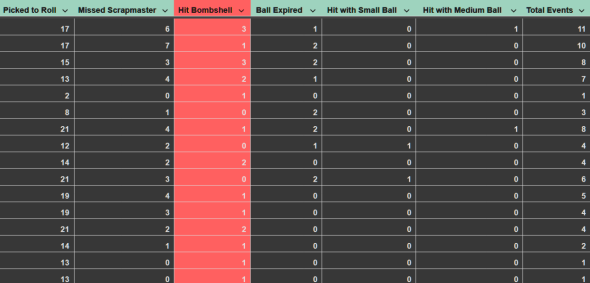
  • Trash ball behaviour: Did players avoid the crab shells? Did they accidentally miss a Scrapmaster and turn into a small ball instead of a medium or large one? Every little bit of damage helps on Stix, and that includes how well you manage those ball mechanics.
  • Interrupts: This is huge. Did we have full coverage on Scrapmasters?

Even on wipes, every pull gives you data. And the more you learn from that data, the faster you kill the boss. We shared a table with player information that showed who missed Scrapmasters or rolled into Bombshells. In this situation, we had to spotlight players who were making errors. Either they weren’t seeing information, or they weren’t responding to it and these are both things we have to correct one by one. Over time, the team did improve as a whole, and the number of mistakes went down as everyone became more familiar with what to look for and what to avoid. Without having waded into the weeds of the information, we would not have realized that the Scrapmaster in the Purple Diamond section (the one near the wall) was the one that frequently got overlooked.

Our coaching point then was if you are assigned diamond, specifically look for the Scrapmaster that’s near the wall because chances are you balled right by it or it happens to blend in with the wall that it’s just missed.

The Debrief Toolkit: What We Look For

Here’s what we usually include in our team debriefs:

  • Positioning: Anyone consistently getting hit by frontals or mechanics they should’ve dodged?
  • Cooldown assignments: Were healing CDs used where they were planned? Were any wasted? Was anyone holding a CD too long out of fear? The flipside holds true as maybe we used a raid wide ability somewhere that didn’t warrant it.
  • DPS optimization: Were people using potions and cooldowns on time? Did they get value out of their major windows? Are they targeting the right ads including Scrapmasters?
  • Death analysis: Were deaths avoidable? Did they come from mechanics, poor healing coverage, or missed externals?

You don’t have to go full detective mode. Even picking two or three key points per night can make a big difference.

Tools We Use

  • Warcraft Logs: The core of any good debrief. Parses, cooldown usage, deaths, damage taken—you name it.
  • Viscerio’s Combat Replay: Great for showing positional data and understanding how the raid moved during a fight.
  • Method Raid Tools Logs: Super helpful for tracking planned cooldowns vs. actual usage.
  • Warcraft Recorder: This one’s a game-changer if you’re not already using it. It captures in-game footage automatically, making it easy to review exact moments, callouts, and spatial awareness issues. Bonus: It’s great for training, clip sharing, or spotting issues that don’t show up in logs.

Tone Matters More Than You Think

If there’s one thing I’ve learned as a raid leader, it’s that tone makes or breaks your debriefs.

You could have the most accurate breakdown in the world, but if it comes across like a scolding session, no one’s going to internalize it. Worse, they’ll tune out or even resent it.

We try to keep things constructive. We highlight the good stuff. “Great use of Pain Suppression on that 2nd phase soak.” “We handled the adds way better this pull.” Stuff like that. Wins get celebrated just as much as fails get analyzed.

Final Thoughts

A raid doesn’t end when the boss dies or wipes your raid group. It ends when you understand why it went the way it did.

Debriefs help bridge the gap between one raid night and the next. They’re how you carry lessons forward. And the better your team reviews together, the stronger you’ll be on the next pull.

Start small. Pick one fight. Pick one thing. Talk about it. You might be surprised how much smoother your next raid night goes.